Follow the child
Children learn best when their natural curiosity leads. We observe each child, notice what they're drawn to, and offer the work that matches their current sensitive period.
Our Approach
We call our approach Montessori-inspired on purpose — we're not an accredited Montessori school. We take the principles that make the method so powerful and apply them with warmth and common sense in a home setting.
Six ideas at the heart of it
Children learn best when their natural curiosity leads. We observe each child, notice what they're drawn to, and offer the work that matches their current sensitive period.
Every shelf is intentional. Materials are beautiful, developmentally-matched, and within reach. Children can choose their own work — and clean it up themselves.
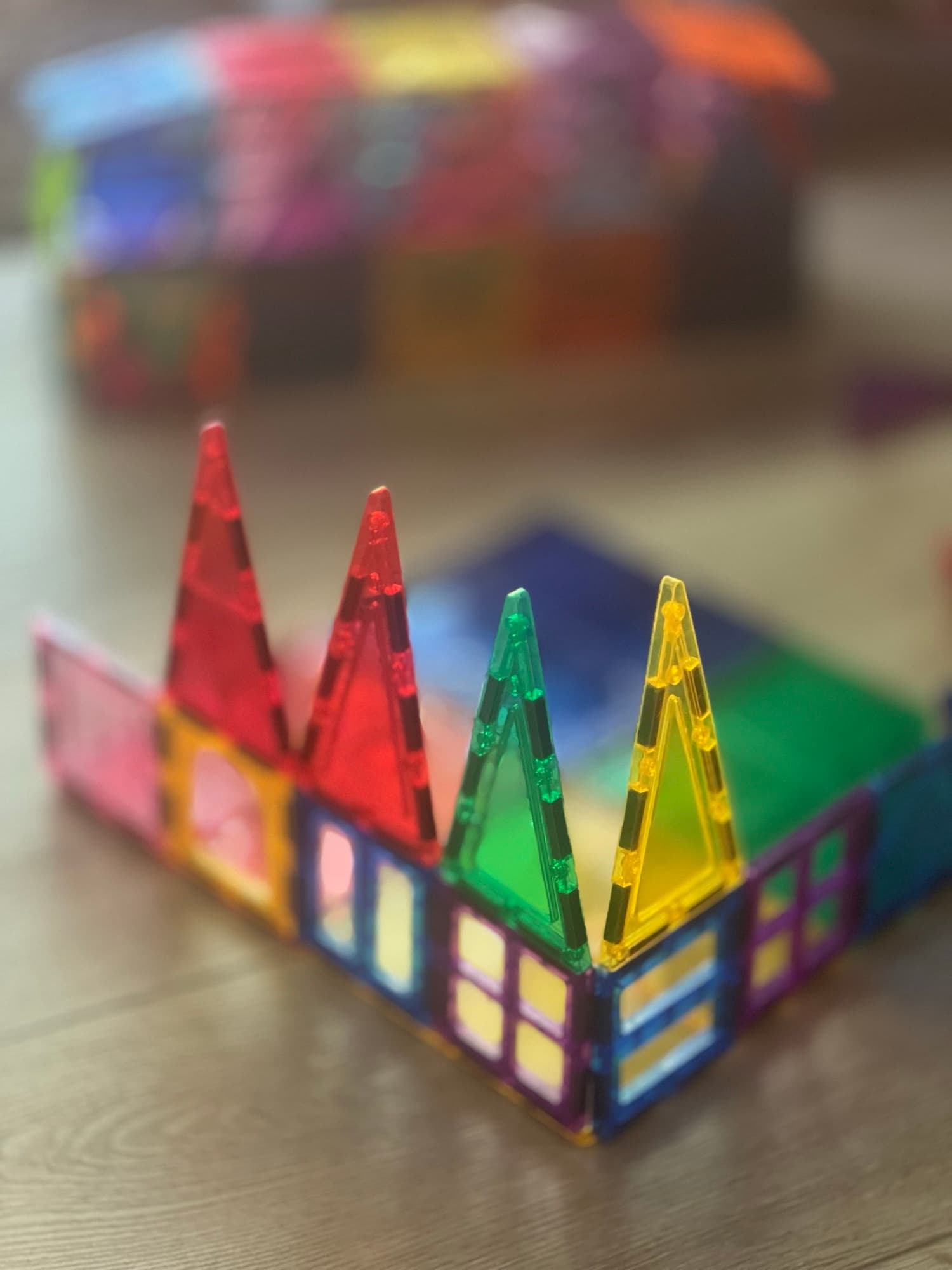
The pink tower, the bead cabinet, sandpaper letters, practical life tools. Abstract ideas become concrete — math you can touch, letters you can trace with your finger.
Younger children learn by watching older ones. Older children deepen their understanding by teaching. It feels like a family because it's structured like one.
Children choose their work, but the environment has gentle boundaries. Freedom to move, freedom to repeat, freedom to finish — inside a calm, consistent frame.
English, Arabic, and French all live in our day — in song, story, greeting, and play. Ms. Sue is fluent in all three. Young children absorb language when it's natural, not when it's drilled.
Six curriculum areas
The classic Montessori curriculum, woven through the rhythm of our day — never as separate subjects, always as connected hands-on work.
Storytelling, conversations, and exposure to diverse texts in three languages — English, Arabic, and French. Children develop language skills and a love for reading.
Reasoning over memorization. Children start with size comparison and quantity identification, then move into hands-on problem-solving with Montessori math materials.
Geography, history, and an appreciation for diverse cultures and peoples. Multicultural storytelling, music, art, and cuisine are part of the rhythm of the day.
Classic Montessori sensorial materials — pink tower, bead cabinet, sandpaper letters — paired with movement, music, and dance to build coordination and sensory awareness.
Music, art, theater, and dance. Children develop an appreciation for artistic expression and explore creativity in many forms — painting, playdough, dramatic play.
Real-life skills built into the day — pouring, dressing, tying shoelaces, personal hygiene, food service, classroom care. Independence and responsibility, one small task at a time.
What parents notice
He's so much more confident and independent now.
The phrase we hear most often
From real Rising Stars parents
Independence isn't something we teach — it's something that emerges when children have the right environment, the right materials, and an adult who trusts them to do things themselves.
A 30-minute tour shows you what an hour of reading can't.
Schedule a Tour